
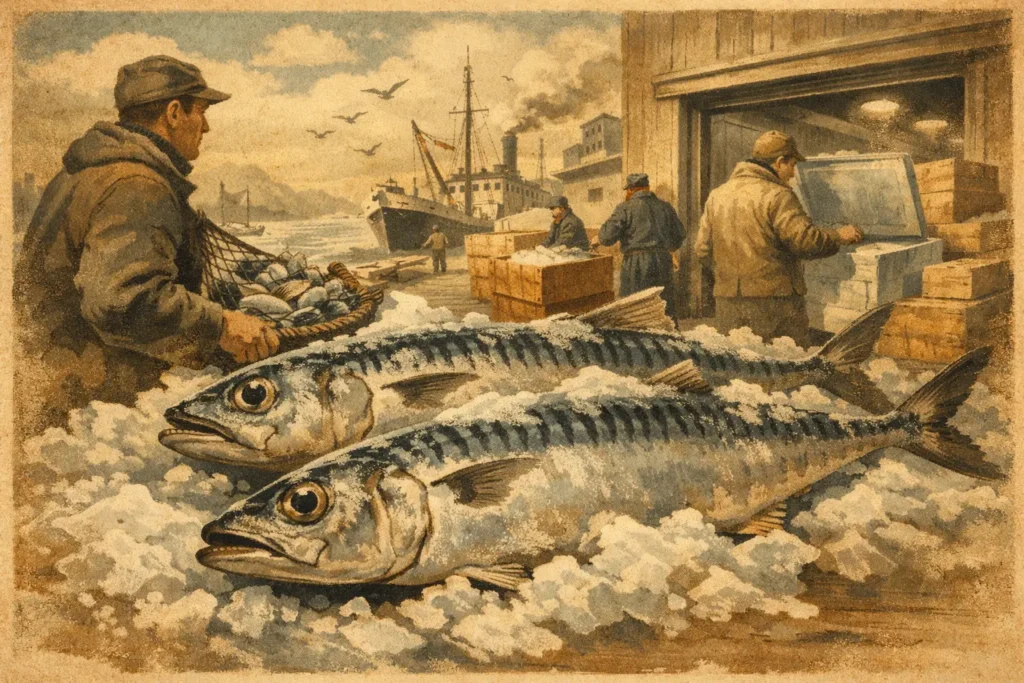
A Pacific mackerel frozen wholesale purchase can look straightforward on a quotation sheet: species, size, packing, quantity, and price. In practice, the value of the transaction is determined later, when the shipment reaches its destination and the product must perform consistently for distributors, processors, retailers, or foodservice customers. Buyers need a supplier that treats specifications, cold-chain discipline, and communication as commercial commitments.
Pacific mackerel is a practical, widely recognized fish for international seafood channels. Its rich flavor, oily flesh, and versatile formats support demand across Asian retail, foodservice, processing, and ethnic seafood markets. Yet these same characteristics make careful freezing, packing, and inventory management essential. A low initial quote is of limited value if glaze, size range, presentation, or arrival condition does not match the buyer’s sales plan.
What Buyers Should Confirm in Pacific Mackerel Frozen Wholesale
The first procurement question is not simply whether Pacific mackerel is available. It is whether the offered product matches the intended market. Whole round fish may suit distributors serving traditional retail and foodservice accounts, while headed and gutted product can reduce preparation work for certain buyers. Each format affects yield, storage, presentation, and the pricing conversation with the end customer.
Size is equally important. A stated size range should be commercially usable rather than overly broad. Buyers should confirm the count or weight range per piece, how that range is packed, and whether the product is sorted to the agreed specification. A processor planning portion-controlled output has different requirements from a wholesaler supplying mixed retail demand. The right size is not universally better – it depends on the channel, menu use, and expected turnover.
Product origin, catch area, processing location, and production period should also be discussed early. These details help importers assess consistency, plan labeling, and compare offers on a like-for-like basis. When buyers request a quotation, clear requirements produce a more meaningful response than a request for a general price alone.
Frozen condition affects commercial results
Pacific mackerel’s natural oil content contributes to its eating quality, but it also raises the importance of sound frozen handling. Product should be processed and frozen under controlled conditions, held at appropriate frozen temperatures, and protected through loading and transit. Damage from temperature abuse, dehydration, poor packing, or excessive handling can appear as surface discoloration, soft texture, broken fish, or avoidable drip loss after thawing.
Glaze deserves particular attention. Glaze helps protect frozen seafood during storage and transport, but buyers should understand whether quoted net weight refers to gross weight or net weight after glaze. This is not a minor technical detail. It affects the usable product received, cost calculations, and customer expectations. The same principle applies to carton weights, master carton construction, inner packaging, and pallet configuration.
A dependable exporter should be prepared to discuss these points directly. Clear answers before loading reduce disagreement after arrival, when remedies are harder and more expensive for every party involved.
Build the Specification Before Requesting a Quote
A complete purchasing specification gives both buyer and supplier a practical reference for recurring business. It does not need to become unnecessarily complicated, but it should remove avoidable assumptions. For Pacific mackerel frozen wholesale, the key commercial details normally include species name, product form, size range, packing style, glaze basis, carton net weight, destination, and required order volume.
Buyers may also need to identify label language, private-label requirements, carton markings, inspection needs, and documents required for import clearance. If the product will move into retail, the label and presentation must work for that retail program. If it will be supplied to foodservice, carton durability and usable portion size may matter more than display-ready packaging.
For recurring orders, it is useful to agree on acceptable tolerances. Fish are natural products, and legitimate variation can occur. The goal is not to demand an unrealistic level of uniformity. It is to establish a standard that remains consistent enough for the buyer’s business model. Experienced seafood trade is built on realistic specifications, documented expectations, and timely discussion when conditions change.
Assess Supply Continuity, Not Just Current Availability
Frozen seafood procurement is often affected by seasonality, fishing conditions, raw material competition, container schedules, and changes in market demand. Pacific mackerel availability can shift by origin and production period. A supplier offering product today may not be able to maintain the same specification, volume, or delivery timing several months later.
For that reason, buyers should ask how an exporter approaches continuity. Is inventory already in cold storage? Is the offer tied to a specific production lot? Can the supplier discuss likely replenishment timing? Are alternatives available if a requested size or format becomes limited? These questions are especially relevant for importers building regular programs rather than making a single opportunistic purchase.
Continuity does not mean promising what cannot be delivered. It means communicating honestly about inventory status, production planning, and lead times. That transparency allows buyers to manage forecasts, customer commitments, and substitute products before supply pressure becomes a problem.
Price should be evaluated in context
Price remains central to wholesale buying, but it should be compared on a fully aligned basis. A lower price can reflect a different size range, higher glaze, different pack weight, older production, a less suitable format, or terms that shift risk to the buyer. Comparing only the headline number can create false savings.
A better approach is to evaluate the landed commercial value of the offer. Consider usable weight, expected condition on arrival, fit for the intended customer, documentation requirements, payment terms, loading schedule, and the supplier’s record of responding when questions arise. This is particularly important when freight and cold storage costs are high. A product that needs to be discounted, reworked, or held longer than planned can erase an apparent purchase advantage quickly.
Choose an Export Partner That Communicates Clearly
International frozen seafood trade depends on details moving accurately across companies, ports, and time zones. The exporter should provide direct communication from quotation through production confirmation, loading, and document preparation. Buyers need to know who is accountable for answering product questions and resolving issues without unnecessary delay.
At Forever Frozen Seafoods, Inc., this approach is shaped by long-standing export experience and the belief that seafood trading is not just about price. The objective is to support repeat business through consistent quality, responsible sourcing, and straightforward communication with wholesale buyers.
A responsible supplier will not treat every inquiry as identical. A distributor supplying Asian supermarkets may need a different Pacific mackerel program from a processor purchasing raw material for further preparation. Discussing the destination market and intended use helps the supplier recommend an appropriate format and pack instead of simply offering whatever inventory is easiest to move.
Preparing for a More Productive Purchase
Before confirming an order, buyers benefit from reviewing the quotation against their original specification and confirming the final details in writing. This includes product description, quantity, price basis, packing, shipment period, port terms, payment terms, and required documents. If a sample, photos, or production information is needed for internal approval, it is better to request it before the order schedule is fixed.
Receiving procedures matter as well. The importing team should be ready to inspect cartons, verify markings, record container and temperature information where applicable, and report any concern promptly with clear evidence. Strong receiving discipline protects the buyer’s own customer relationships and gives both parties a factual basis for discussion should an issue arise.
The most useful Pacific mackerel supplier is not simply the one that can quote a container. It is the one that can help a buyer purchase with confidence, maintain a consistent program, and handle the normal realities of international frozen seafood trade with integrity.